Seasonal Escapes
August near Zadar: an evening full of wishes
Finish dinner. Leave the bright screens behind. There may be a little more to wish for tonight.
Quick answer
Quick answer: August near Zadar: an evening full of wishes
August brings the Perseids, often called the tears of St Lawrence in Croatia. Around the usual mid-August peak, choose a clear night and an open, darker view. Begin in Lostura’s garden if conditions suit, or use a coastal spot checked in daylight. Allow time to settle in and let your eyes adjust.
A different kind of August evening
Not every memorable holiday moment needs a reservation. After a day by the sea and dinner at the villa, let the evening become simpler: comfortable seats, quiet conversation and a patch of sky. Someone notices a brief line of light. Someone else was looking the other way. There is time to wait for another.
In Croatia, the Perseids are affectionately called suze svetog Lovre — the tears of St Lawrence. Make one wish or a whole year’s worth. The wishes belong to the story; the sky keeps its own schedule.
What you are watching
The Perseids are meteors associated with debris from comet Swift–Tuttle. They are not falling stars, although that familiar expression captures the feeling. Their usual peak is around 12–13 August, close to — but not fixed by — St Lawrence’s feast on 10 August.
Before planning a particular night, check the current year’s peak guidance and Moon conditions. A clear, darker sky gives you a better chance; clouds or a bright Moon can change the experience.
Start in the garden. Choose the sky that night.
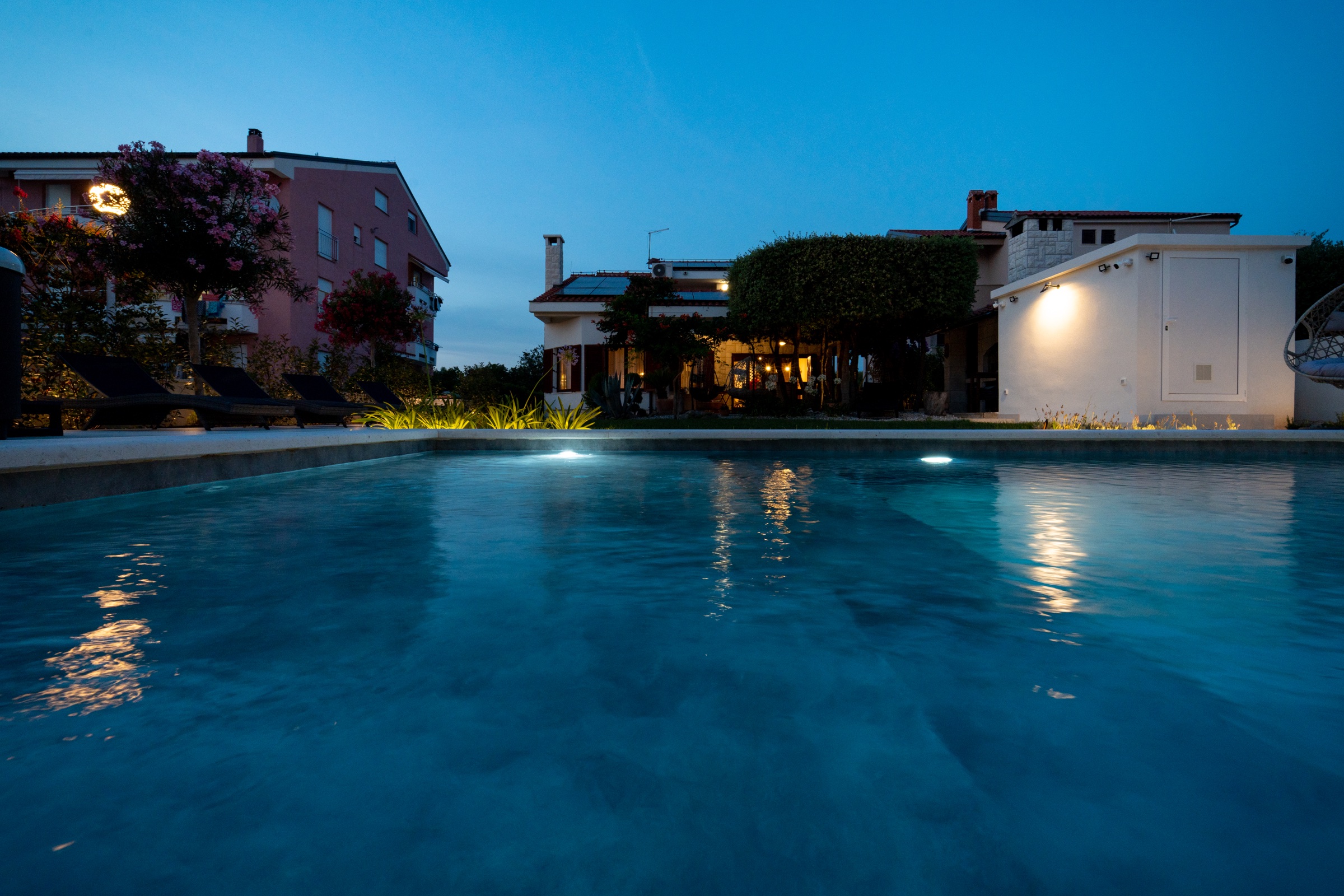
At Lostura, begin by checking which part of the garden offers the most open view. Reduce optional decorative lighting where appropriate, while keeping necessary path and safety lighting. Trees, nearby buildings and neighbouring lights may still obscure or brighten the sky.
The coast can offer a wider outlook, but it is not automatically darker. Scout a permitted spot in daylight, check the ground and the return route, and stay well clear of the water’s edge in the dark. Take care of children and anyone who needs a steadier path. Do not switch off public lights or enter closed or private areas.
No telescope. No hurry.
Use your eyes rather than a telescope, which narrows your view. Give your eyes time to adapt and keep bright phone screens out of the way. Watch a broad area of sky instead of staring at a single star; later night and pre-dawn hours can be rewarding if they suit your group.
Bring something comfortable to sit on and a layer for the evening. Settle in without counting down to a result. You might spot several meteors, only a few or none at all — and still have spent a lovely hour together.
A little less light. A little more time. A wish or two for the year ahead.
Make it part of a week, not the whole plan
Leave one suitable evening open around the shower, with another night as a weather alternative. Keep the rest of the week flexible: a Nin outing, a beach chosen for the day, and time simply enjoying the villa.
Earlier in the day, our saltworks and Gregory of Nin story offers another small wish-making tradition. Back home, prepare a shared grill dinner before looking up. If clouds arrive, keep the long table and the conversation. The evening has not been wasted.
Good to know
Questions, answered.
What are the tears of St Lawrence?
The Croatian name suze svetog Lovre refers to the Perseid meteor shower, seen each year around August. The light streaks are meteors, not stars falling from the sky; making a wish is part of the romance of the evening.
When should we look for the Perseids near Zadar?
The shower usually peaks around 12–13 August, but check the current year’s astronomical guidance and local timing. St Lawrence’s feast on 10 August is not a fixed meteor-shower peak. Darkness, moonlight and cloud cover all affect the view.
Can we watch from Villa Lostura?
The garden can be a convenient starting point if there is a clear view and little direct glare. Nearby lights and trees may limit the view, and the villa is not a certified dark-sky location. For a wider view, choose a permitted coastal spot checked in daylight, away from bright lighting.
Do we need a telescope?
No. Watching with the naked eye gives a broad view of the sky. Let your eyes adjust to the dark, avoid bright phone screens and give the evening time. The pre-dawn hours can be productive, but there is no guaranteed meteor count.
Is this a guided activity offered by the villa?
No. This is a self-guided idea for your August stay, not a guided astronomy service. Confirm the forecast, local access and the suitability of your chosen spot; do not enter closed beaches or private land.
Sources & editorial notes
Details were checked against the official sources below on 9 September 2026. Opening times, tours, reservations and seasonal conditions can change; check directly before setting out.
- NASA Science — Perseids The meteor shower, its usual mid-August peak and viewing guidance.
- Zagreb Observatory — Perseid viewing advice The local name suze svetog Lovre and why an open, dark sky is best for naked-eye viewing.
- DHMZ — Croatian weather forecasts Check the current forecast before planning an outdoor evening.